
The top number is your systolic pressure, the force in your arteries when your heart beats. The bottom is your diastolic pressure, the force while your heart relaxes between beats. Per ACOG, below 140/90 is usual in pregnancy, 140/90 or higher is elevated, and 160/110 or higher is severe. General guides only: warning symptoms need a call, whatever the number.
Every blood pressure reading is two numbers, written one over the other, like 118/75. Each measures a different moment of your heartbeat. Together, the two tell your care team something important during pregnancy. Learning what they mean takes a couple of minutes, and it makes every reading you log more useful.
This is a guide to reading your own numbers with confidence, not to diagnose yourself. What a given number means for you is a conversation for you and your care team. Here's the background that makes that conversation easier.
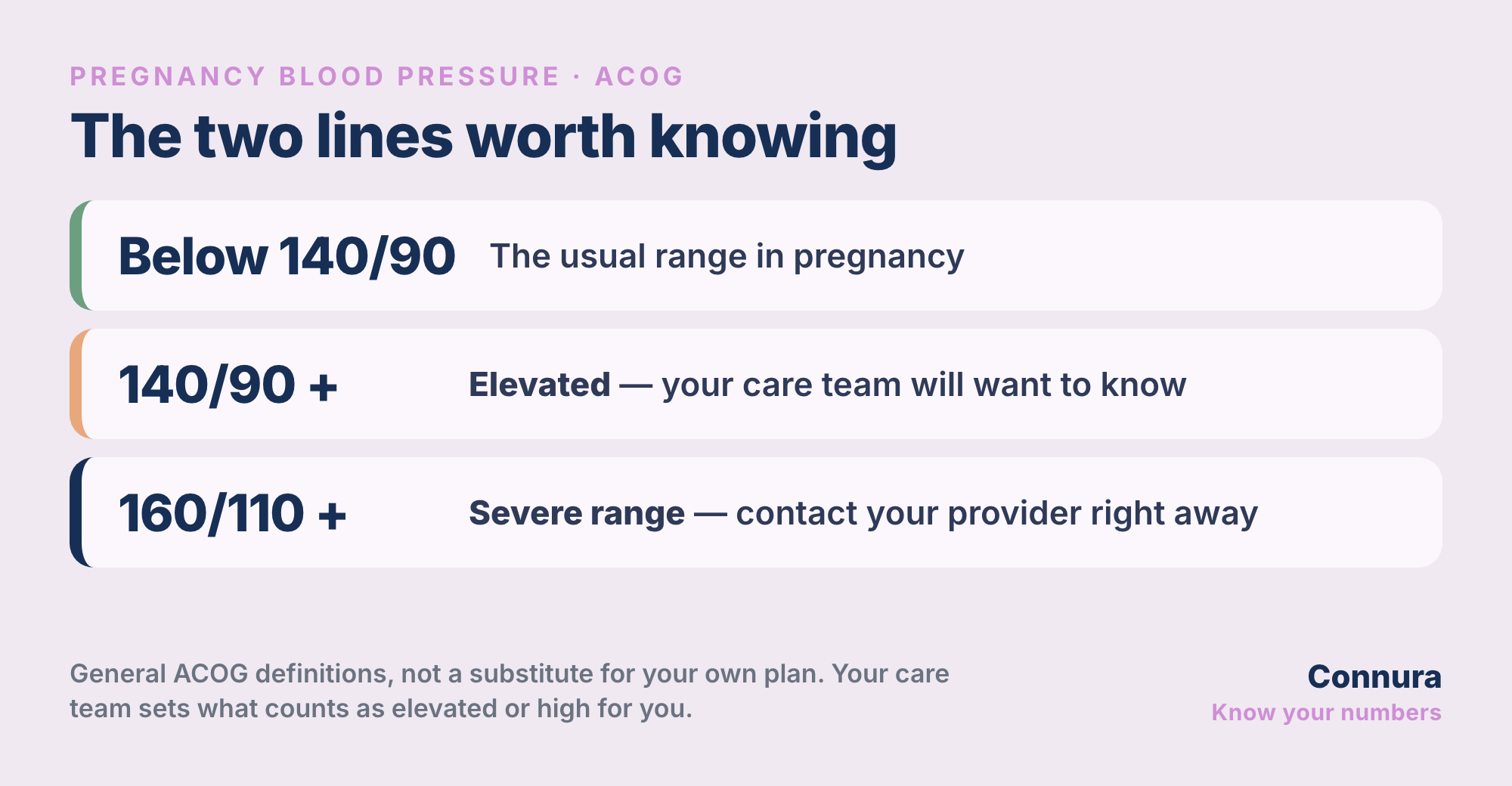
Pregnancy blood pressure reference per ACOG:
Below 140/90 is the usual range,
140/90 or higher is elevated,
and 160/110 or higher is the severe range.
The Top Number: Systolic
The top number is your systolic pressure: the force in your arteries each time your heart beats and pushes blood out. It's the higher of the two numbers. When people quote a single blood pressure figure, this is usually the one they mean. But in pregnancy, the bottom number matters just as much.
The Bottom Number: Diastolic
The bottom number is your diastolic pressure: the force in your arteries while your heart relaxes and refills between beats. It's the lower of the two numbers. A rise in your diastolic pressure can be just as meaningful as a rise in your systolic pressure. That's why your care team looks at both.
Both numbers count. In pregnancy, a high reading in either the top or the bottom number can matter. It doesn't have to be both.
What Counts as "High" in Pregnancy
Pregnancy has its own blood pressure reference points, and they differ from the general adult charts you may have seen. The American College of Obstetricians and Gynecologists (ACOG) defines two thresholds that guide pregnancy care:
- Below 140/90 — This is generally considered the usual range in pregnancy.
- 140/90 or higher — ACOG defines this as hypertension in pregnancy (elevated). It's information your care team will want.
- 160/110 or higher — ACOG defines this as the severe range.
"One reading is a snapshot; your care team reads the pattern over time."
These numbers are ACOG's general definitions, not a substitute for your own plan. Your history, your risk factors, and the guidance your care team has given you all shape what a specific reading means for your pregnancy, and how quickly to act on it.
One Reading Is Only a Snapshot
A single measurement rarely tells the whole story. Blood pressure naturally rises and falls through the day, and things like a stressful moment, a recent walk, or even a full bladder can nudge a reading up. What your care team relies on is the pattern: your readings over time.
That's the real value of tracking at home: not any one number, but the trend you build between appointments. Connura will keep that history in one place so you and your provider can see it together.
One exception to "wait for the pattern": a reading at or above 160/110, or any warning symptom, still deserves a call right away. Those don't wait for a trend.
Warning Symptoms: Call Right Away, Whatever the Number
Some symptoms matter regardless of what your reading shows. Contact your care team the same day if you have:
- A headache that won't go away
- Vision changes: blurry vision, spots, or flashing lights
- Pain in your upper belly, under your ribs
- Sudden swelling in your face or hands
Work With Your Care Team
Your care team is the best source for what your numbers mean for you. Always follow the guidance they've already given you about which readings and symptoms should prompt a call. If you haven't had that conversation yet, it's worth raising at your next appointment. That way, you both know what to watch for going forward.
Once you have that plan, you'll be able to enter those thresholds in Connura, which launches late 2026. You'll see a status label for each reading, based on the thresholds your care team sets rather than a generic chart, and you'll be able to generate a report anytime to share your readings with your team. Connura won't decide your plan; it will help you follow the one you built together.
Frequently Asked Questions
Which number is more important in pregnancy, the top or the bottom?
Both. In pregnancy, a high reading in either your systolic (top) or diastolic (bottom) number can matter, so your care team watches both.
My reading is a little high once. Should I worry?
One elevated reading is information, not a diagnosis. Rest a few minutes, take another with good technique, and log it. Your care team reads the pattern over time, but a reading at or above 160/110, or any warning symptom, warrants a call right away.
Why are pregnancy thresholds different from regular blood pressure charts?
Pregnancy changes how your body regulates blood pressure, so ACOG uses pregnancy-specific reference points (140/90 and 160/110) rather than the general adult categories.
References
- American College of Obstetricians and Gynecologists (ACOG). Gestational Hypertension and Preeclampsia. ACOG Practice Bulletin No. 222. Obstetrics & Gynecology. 2020;135(6):e237–e260. https://www.acog.org/clinical/clinical-guidance/practice-bulletin/articles/2020/06/gestational-hypertension-and-preeclampsia
- American Heart Association. Understanding Blood Pressure Readings. 2024. https://www.heart.org/en/health-topics/high-blood-pressure/understanding-blood-pressure-readings
- American Heart Association. Monitoring Your Blood Pressure at Home. 2024. https://www.heart.org/en/health-topics/high-blood-pressure/understanding-blood-pressure-readings/monitoring-your-blood-pressure-at-home
Connura provides educational information. It does not measure blood pressure and does not replace medical care. In an emergency, call 911 (or your local emergency number).
Connura is not a medical device and is not intended to diagnose, treat, or replace medical care. Always consult your healthcare provider for medical advice.