
Why Pregnancy Specific BP Monitoring Matters
Connura is a pregnancy blood pressure tracking app, built specifically for pregnancy and postpartum. It launches late 2026. It will help you follow ACOG guidelines for home blood pressure monitoring, using the thresholds your care team gives you. There's no charge for the app during this introductory period. Join the waitlist to be among the first to try it.
Hypertensive disorders are a leading cause of maternal death, and most women don't know their risk continues beyond delivery.
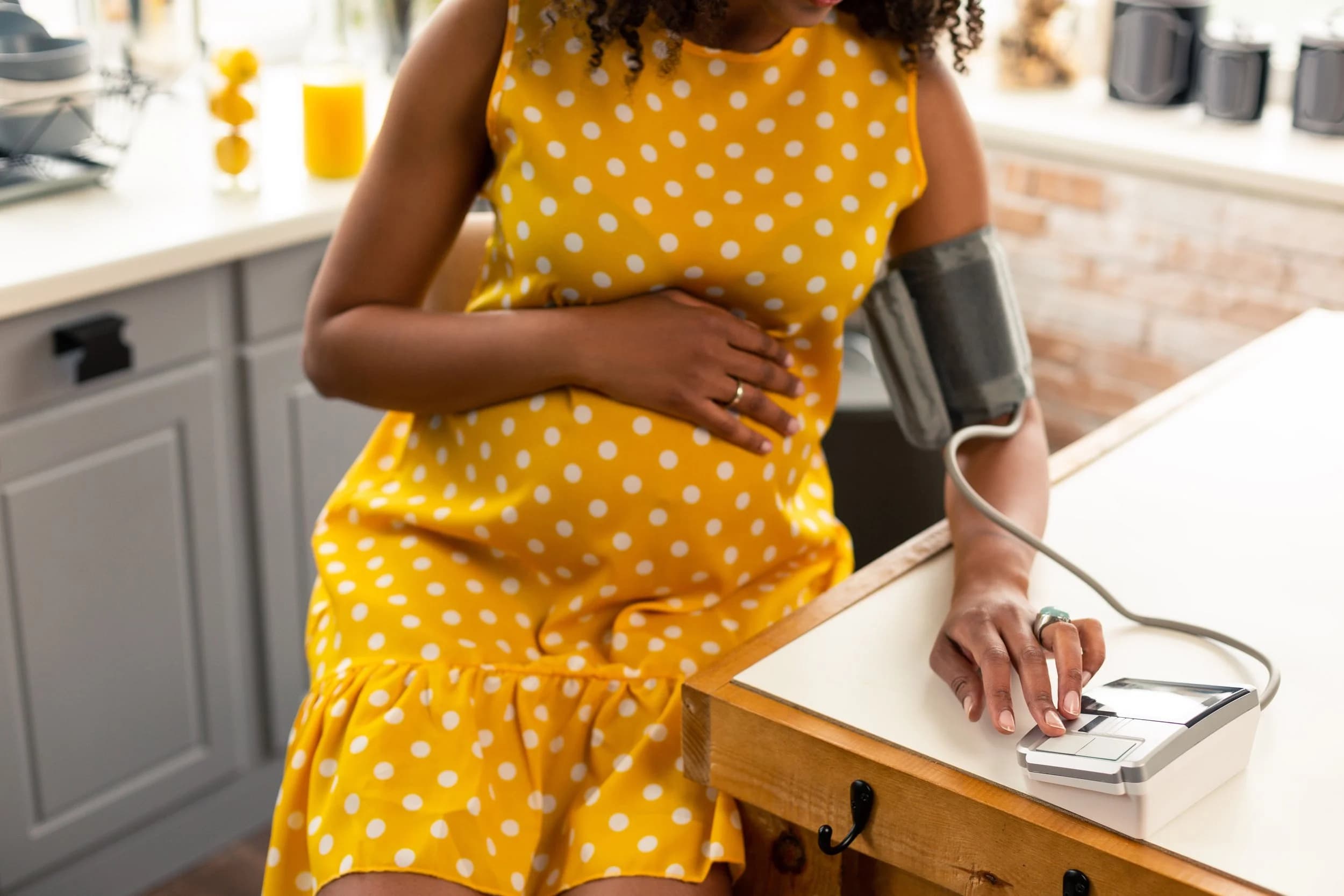
"Hypertensive disorders of pregnancy are a leading cause of maternal mortality and severe maternal morbidity."
CDC Maternal Health Data
Types of high blood pressure in pregnancy:
Gestational Hypertension - High blood pressure develops after 20 weeks of pregnancy. It often resolves after delivery, but it should be monitored closely until then.
Preeclampsia - High blood pressure, along with signs that your organs are under stress, most commonly your kidneys or liver. It can develop quickly and become serious if it's not caught early. Your risk doesn't end at delivery.
Chronic Hypertension - High blood pressure that was present before pregnancy or appeared before 20 weeks. It raises your chances of developing preeclampsia and other complications as your pregnancy progresses.
HELLP Syndrome - A serious complication that affects your liver and your blood's ability to clot. It requires immediate medical attention — if you experience severe upper abdominal pain, nausea, or sudden swelling, contact your provider right away.
Every year in the U.S., 400,000 to 600,000 pregnant women develop hypertensive disorders — conditions where blood pressure rises to levels that can threaten both mother and baby.
Source: CDC Maternal Health Data

What to Watch For
Between your prenatal appointments, contact your care team immediately if you experience:
- Severe headache that won't go away
- Vision changes (blurred vision, seeing spots, light sensitivity)
- Upper abdominal pain (under your ribs on the right side)
- Sudden swelling of your face or hands
- Shortness of breath
These symptoms, combined with high blood pressure, may signal preeclampsia. When in doubt, always reach out to your care team—they would rather answer your questions than have you wait.
Your blood pressure naturally shifts throughout pregnancy as your body adapts to support your baby.
In early pregnancy, BP typically drops as your blood vessels relax. By mid-pregnancy, it reaches its lowest point.
The Critical Window
After 20 weeks of pregnancy, your risk for gestational hypertension and preeclampsia begins. This is when your blood pressure may start rising—and when regular monitoring becomes essential.
Preeclampsia can develop suddenly, even if you've had normal readings throughout your pregnancy. That's why your care team starts checking your BP more frequently in the third trimester.
The Postpartum Risk
The Highest-Risk Period Comes After Delivery
Most people assume pregnancy complications happen before birth, but many happen after.
According to the CDC
“ 40% of hypertension-related maternal deaths occur postpartum—most within the first two weeks after delivery."
The Care Gap
After delivery, you're home. Your next appointment may not be for six weeks. During this window, blood pressure problems can develop quickly—even if your BP was normal throughout pregnancy.
Without regular monitoring, symptoms can be dismissed as exhaustion or normal postpartum recovery. By the time many women seek care, the condition has become severe.

What You Need to Know
Postpartum preeclampsia can develop in the days and weeks after delivery, whether or not you had high blood pressure during pregnancy. Your care team will tell you how often to check your BP at home and what numbers warrant communication.
If you experience any of the symptoms listed in the previous section, contact your care team or go to the emergency room immediately. Don't wait for your next scheduled appointment.
Home BP monitoring is established clinical practice, backed by research and medical guidelines.
Research Finding: In two trials of women with hypertensive disorders of pregnancy, remote blood pressure monitoring raised the share with a blood pressure check in the first 10 days after delivery from about half to about 9 in 10.
Clinical Guideline: The American College of Obstetricians and Gynecologists (ACOG) recommends home BP monitoring for women with hypertensive disorders of pregnancy, continuing through the postpartum period.
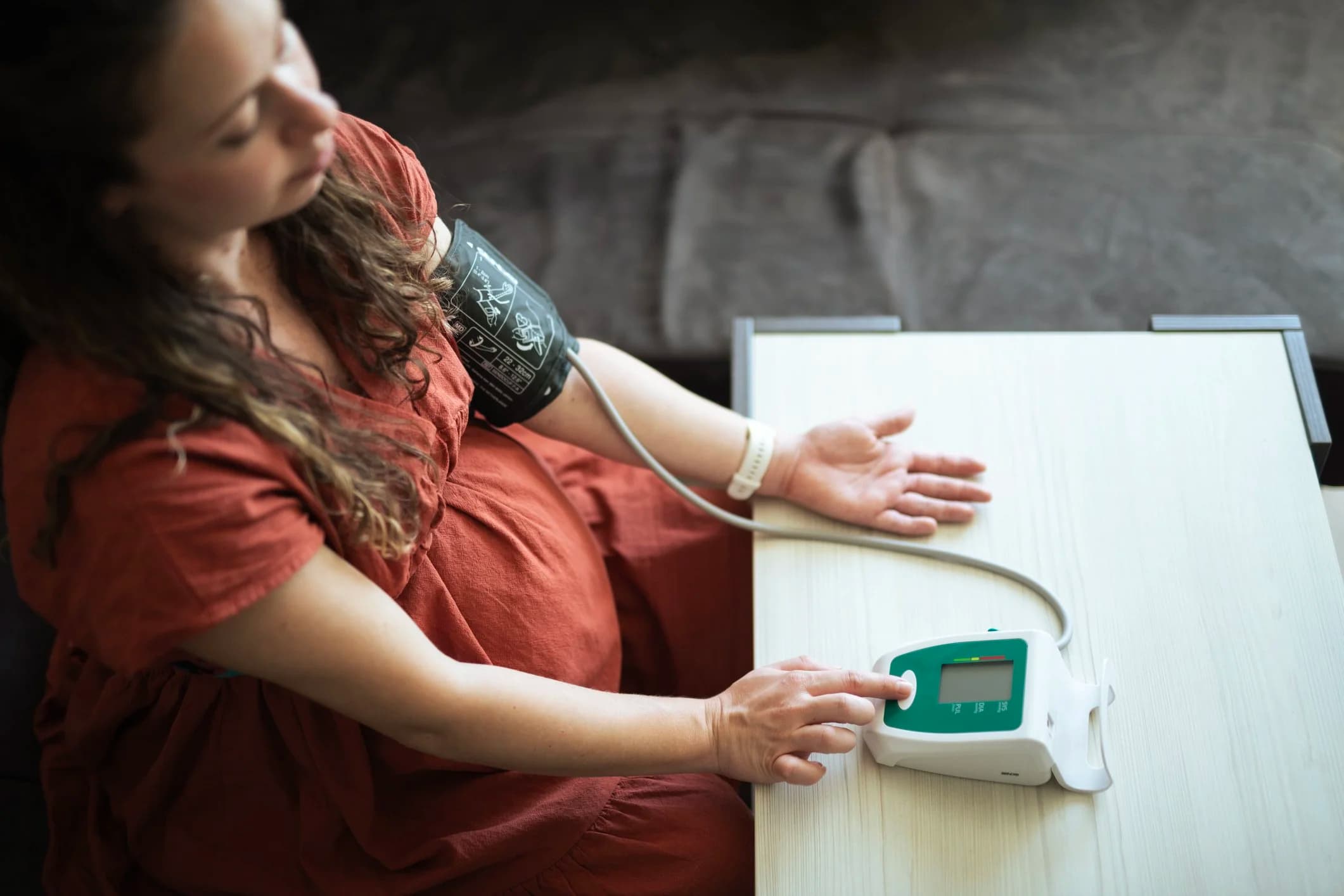
Evidence for Home Monitoring
Why Monitoring Between Appointments Matters
Prenatal appointments happen every few weeks. Blood pressure can rise suddenly between visits. Home monitoring catches elevations early—when intervention is most effective and complications are preventable.
Your care team will give you specific BP thresholds and tell you when to call. Sharing your home readings helps your care team make informed decisions about your treatment.
What This Means for You
If your care team recommends home BP monitoring, it's because evidence shows that home BP monitoring helps more women with hypertensive disorders get recommended follow-up. The readings you take at home are essential data. They help protect your health and help your care team provide better care.
Is There a Blood Pressure App Made for Pregnancy, Not the General Population?
Connura is a blood pressure app made for pregnancy and postpartum, not the general population, and it launches late 2026. Standard apps don't know the plan your care team gave you.
Connura will help you follow ACOG guidelines for home blood pressure monitoring.